
Abdominal Pressure Acid Reflux: Can Pressure Push Reflux Upward?
Abdominal pressure acid reflux mechanisms may help explain why some people continue experiencing chronic reflux symptoms even while taking medication.
Many individuals notice that reflux becomes worse:
after eating,
when bending forward,
during physical effort,
or in stressful situations.
In many cases, these symptoms are immediately associated only with stomach acid. However, abdominal pressure may also play an important role in how reflux happens.
For some individuals, reflux is not only about acidity. It may also involve pressure regulation, diaphragm function, and mechanical support around the gastroesophageal junction.
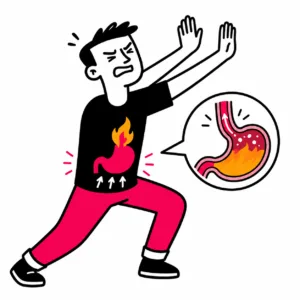
How Abdominal Pressure Influences Acid Reflux
Inside the abdomen, pressure is constantly changing.
Breathing,
posture,
movement,
exercise,
stress,
and digestion all influence abdominal pressure throughout the day.
Normally, the body manages these pressure changes efficiently. The diaphragm and the lower esophageal sphincter work together to help keep stomach contents inside the stomach.
However, when pressure regulation becomes less coordinated, reflux episodes may happen more easily.
This may help explain why some individuals experience reflux symptoms even without excessive acid production.
According to research published through the National Institutes of Health, gastroesophageal reflux disease involves multiple physiological mechanisms beyond acid exposure alone.
Why Reflux Gets Worse After Eating
Many people with abdominal pressure acid reflux notice symptoms becoming worse after meals.
After eating, the stomach naturally increases in volume. This creates additional pressure inside the abdominal cavity.
When diaphragm coordination and abdominal pressure regulation are less efficient, this pressure may push stomach contents upward more easily.
This is one reason some individuals:
feel reflux after small meals,
experience pressure after eating,
or notice worsening symptoms at the end of the day.
You can also read:
👉 https://somatovisceral.com/en/ppis-acid-reflux/
Why Bending Forward and Physical Effort Can Trigger Reflux
Many patients report worsening reflux symptoms when:
bending forward,
lifting weight,
exercising intensely,
or compressing the abdomen.
These activities temporarily increase abdominal pressure.
If the gastroesophageal junction loses part of its mechanical support, this increase in pressure may favor reflux episodes.
For some individuals, reflux symptoms may therefore involve not only acid production, but also the way the body manages pressure and diaphragm coordination.
The Diaphragm’s Role in Abdominal Pressure Acid Reflux
The diaphragm is the main breathing muscle, but it also plays an important role in gastroesophageal support.
It helps coordinate pressure between the chest and the abdomen while reinforcing the lower esophageal sphincter.
When breathing patterns become shallow or poorly coordinated, diaphragm support may become less efficient.
This may contribute to:
reflux after eating,
reflux during stress,
pressure sensations,
belching,
and recurring reflux symptoms.
You can also read:
👉 https://somatovisceral.com/en/diaphragm-acid-reflux/
Why Medication Does Not Always Fully Solve Reflux
Medication can be extremely important in the treatment of chronic reflux.
However, acid-reducing medication mainly decreases acidity. It does not retrain breathing patterns, improve diaphragm coordination, or regulate abdominal pressure.
This may help explain why some individuals:
improve partially,
feel temporary relief,
but continue experiencing recurring symptoms.
In some cases, reflux mechanisms remain active even when acidity becomes lower.
A Functional Approach to Abdominal Pressure Acid Reflux
A functional approach to abdominal pressure acid reflux looks beyond stomach acid alone.
Digestive physiotherapy may help address:
breathing patterns,
diaphragm coordination,
abdominal pressure regulation,
and muscular function related to reflux mechanisms.
The goal is not simply to reduce symptoms temporarily, but to improve the functional mechanisms involved in reflux episodes.
Conclusion
Abdominal pressure acid reflux mechanisms may help explain why chronic reflux symptoms worsen after eating, bending forward, physical effort, or stress.
For some individuals, reflux involves more than stomach acid alone.
Diaphragm function, pressure regulation, and mechanical support around the gastroesophageal junction may all influence reflux symptoms and recurrence.
Paulo Bastos provides online consultations worldwide for patients struggling with chronic acid reflux and functional digestive disorders.
👉 https://somatovisceral.com/contact/
Paulo Bastos is a Brazilian physiotherapist specialized in functional digestive disorders, including chronic acid reflux, bloating, abdominal distension, constipation, and abdominophrenic dyssynergia.